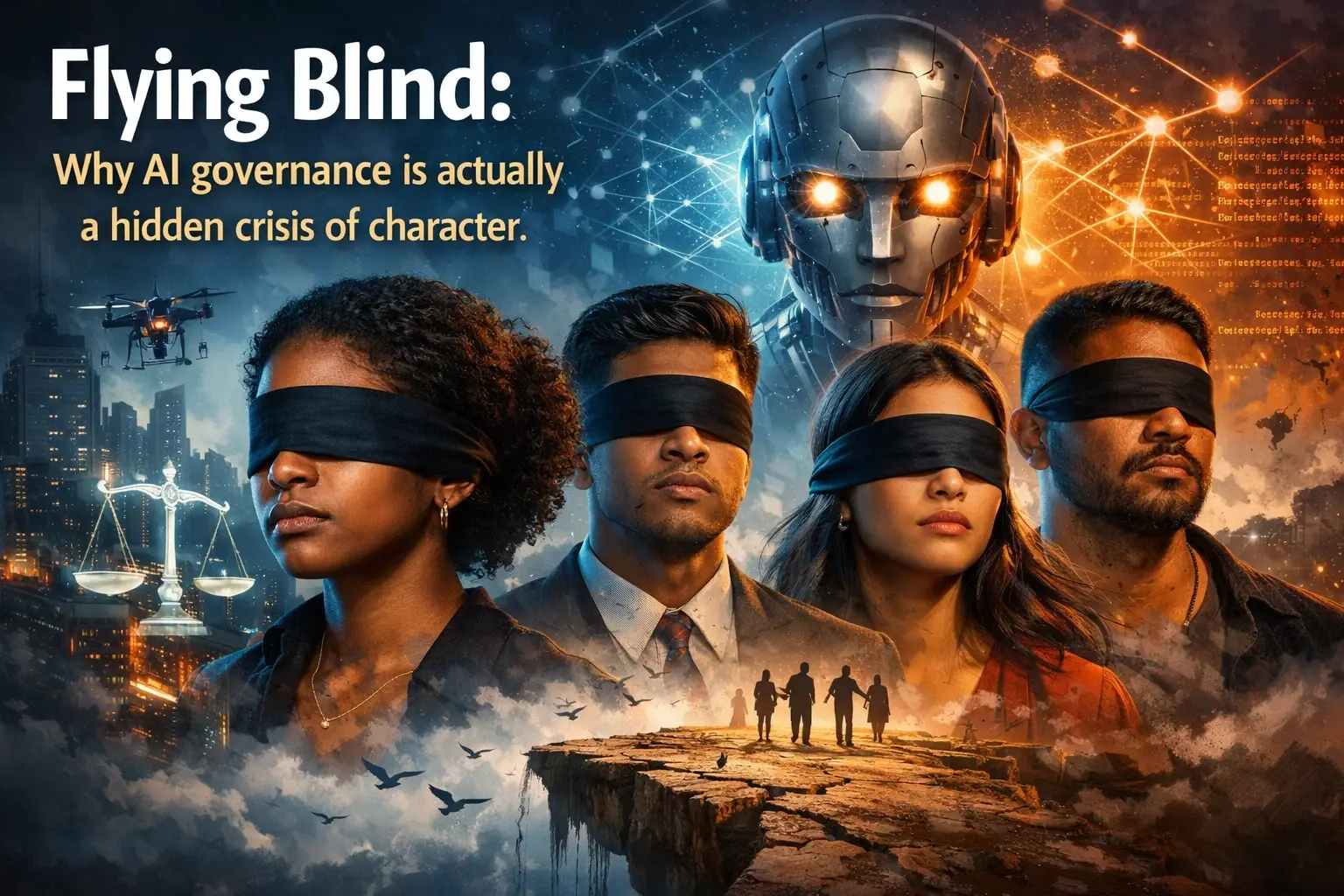
Here's the uncomfortable truth nobody's saying out loud: your AI governance framework isn't failing because it's incomplete. It's failing because it's exposing who you really are as a leader.
Strip away the compliance theater and the risk matrices, and AI governance becomes a mirror. It reflects your actual priorities, your tolerance for ambiguity, your relationship with power, and whether you're willing to make the hard call when speed and ethics collide. Most leaders don't like what they see.
The Checklist Delusion
We've convinced ourselves that AI governance is a technical problem. Build the right committee. Check the bias boxes. Document the decision tree. Get legal to sign off. Ship it.
But here's what's actually happening in boardrooms and strategy sessions: leaders are using "governance" as a synonym for "coverage." They're building frameworks designed to deflect accountability, not invite it. The goal isn't ethical AI deployment, it's plausible deniability when things go sideways.

You can spot this everywhere. Companies rush to deploy AI systems that influence hiring, firing, and performance evaluations, but when pressed on how these systems make decisions, the answer is consistently vague. "The algorithm considers multiple factors." Translation: we don't know, we didn't ask, and we're hoping you won't either.
This isn't incompetence. It's character. Specifically, it's the character flaw of wanting innovation's upside without accountability's burden.
When Governance Meets Your Shadow
The research is damning. Power in AI has shifted almost entirely from public institutions to private corporations, not just in product deployment, but in fundamental research and the datasets that shape what's possible. And those holding this power have every incentive to develop and deploy increasingly powerful models with minimal guardrails.
But let's bring this down from the macro level to your organization. Because the same dynamic plays out whether you're running a Fortune 500 company or a 50-person startup.
When you implement AI without genuine governance, you're not just making a strategic error. You're making a values statement. You're telling your team that moving fast matters more than moving right. You're signaling that quarterly metrics trump long-term trust. You're demonstrating that when innovation and integrity conflict, you'll choose innovation every single time.

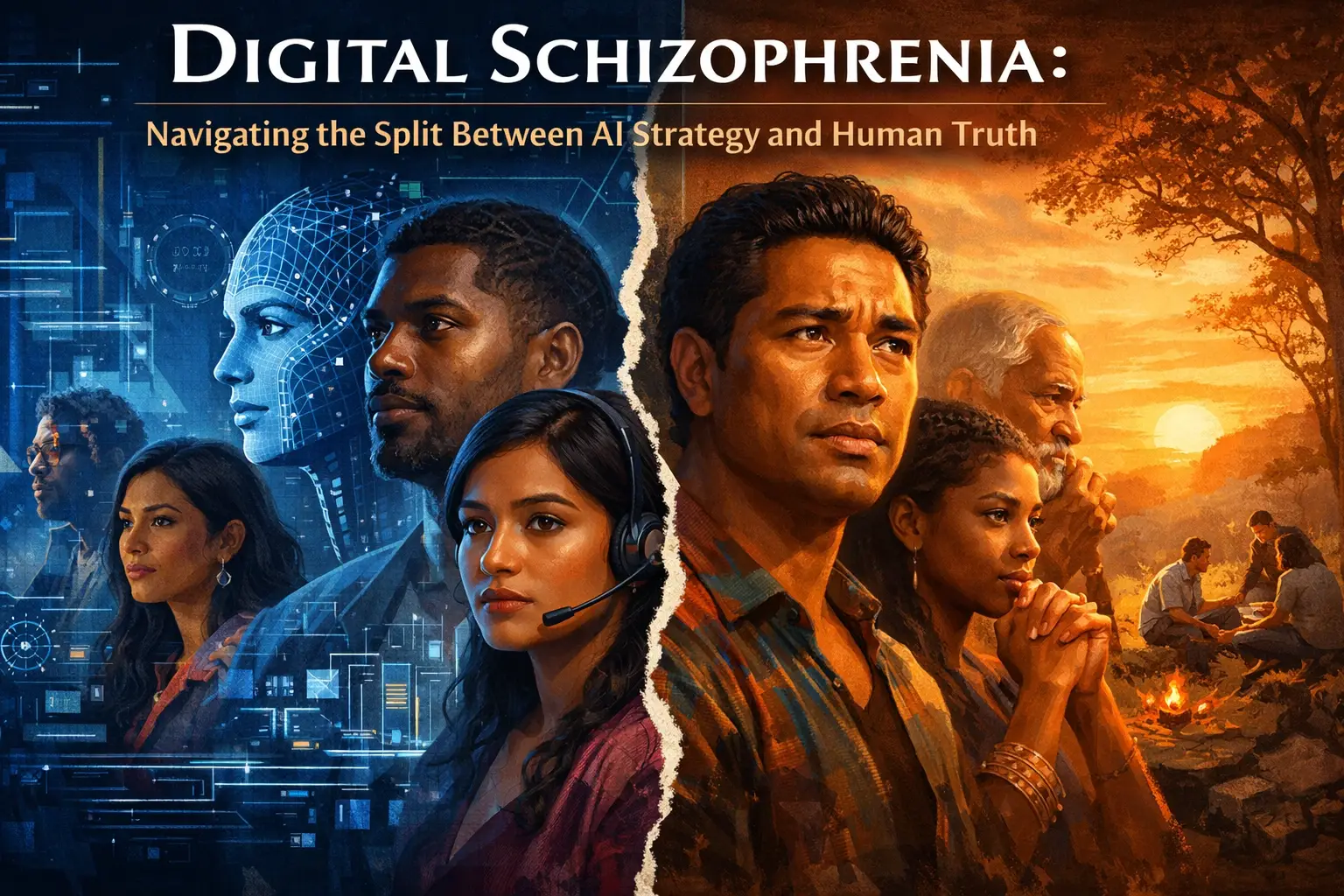
Your team reads this. They internalize it. And then organizational fragmentation begins.
The Fragmentation Nobody Talks About
Here's what poor AI governance actually creates inside your organization:
Trust erosion. When employees watch leadership deploy AI systems that affect their work, their performance reviews, or their career trajectories without transparency or input, they stop trusting leadership's judgment on everything else. The fragmentation spreads.
Moral injury. Your high-performers, the ones with actual principles, face an impossible choice. Do they speak up about AI implementations that feel wrong, knowing it might brand them as "not innovative" or "resistant to change"? Or do they stay silent and watch their workplace become something they don't recognize? Many choose a third option: they leave.
Shadow systems. When formal AI governance is performative rather than protective, people create unofficial workarounds. Data gets shared outside approved channels. Decisions get made in Slack threads instead of documented processes. Your "governed" AI strategy exists on paper while the real strategy lives in the gaps.
Accountability vacuum. This is where it gets dangerous. When something goes wrong, and it will, nobody knows who's responsible. The AI did it. The vendor recommended it. The committee approved it. Leadership encouraged innovation. Everyone's involved, so nobody's accountable.

Sound familiar? This isn't a failure of process. It's a failure of character at the leadership level, metastasizing throughout the organization.
The Character Questions Nobody's Asking
Real AI governance, the kind that actually protects your people and your mission, starts with questions that have nothing to do with technology:
Who gets hurt if this goes wrong? Not "what's our risk exposure" or "how do we limit liability," but actually: which human beings will experience harm, and are we okay with that?
What am I unwilling to compromise? Every leader claims to have values. AI deployment is where you find out if that's true or just branding. What's your non-negotiable line, and have you communicated it clearly enough that your team would recognize when it's being crossed?
Am I building this to solve a real problem or to look innovative? Be honest. How many AI implementations in your organization are solving actual pain points versus checking boxes on someone's transformation roadmap?
Who's really making decisions here? When power is concentrated in algorithms with unclear decision-making processes, you haven't delegated, you've abdicated. Is that intentional?
These questions make people squirm because they cut through the technical jargon straight to intention and integrity.
What Governance With Character Actually Looks Like
Here's the pivot: real AI governance isn't about having perfect answers. It's about having the character to ask better questions and the courage to act on what you discover.
Transparency over sophistication. Can you explain your AI systems' decision-making processes in plain language to the people most affected by them? If not, you're not ready to deploy.
Participation over permission. Are the people whose work and livelihoods will be affected by your AI systems involved in governance decisions? Or are you doing innovation to them instead of with them?

Constraints over speed. Are you willing to slow down or even stop an AI rollout when governance questions aren't adequately answered? Your response to this question tells your organization everything about your actual priorities.
Accountability over ambiguity. When something goes wrong, is there a specific human being responsible for investigating, communicating, and correcting course? Or does accountability dissolve into committees and vendors and "the algorithm"?
Ethics over optics. Are your governance frameworks designed to do the right thing or to look like you're doing the right thing? There's a difference, and everyone knows which one you've chosen.
The Leadership Moment
AI governance isn't going to get easier. The technology is accelerating, the pressure to deploy is intensifying, and the gap between what's possible and what's wise is widening daily.
But here's what doesn't change: leadership is still fundamentally about character. It's about who you are when nobody's watching, when the pressure's on, when the easy path and the right path diverge.
Your AI governance framework: or lack thereof: is revealing that character right now. Your team sees it. Your customers will see it eventually. The only question is whether you're willing to see it yourself.
Because you can't build trustworthy AI systems without being a trustworthy leader. You can't expect ethical outcomes from unethical processes. And you can't create organizational coherence while governing through ambiguity and hope.

The crisis isn't that AI governance is hard. The crisis is that it requires leaders to actually lead: with clarity, integrity, and the willingness to sacrifice short-term wins for long-term trust.
Most aren't ready for that. But some are.
Which one are you?