The music industry is currently in a state of high-stakes legal warfare. If you’ve spent any time online recently, you’ve heard what AI can do with a melody. It’s impressive, terrifying, and: according to the world’s biggest record labels: entirely illegal. We are moving past the "cool tech demo" phase and straight into the courtroom.
The core of the conflict isn't just about the music being generated. It’s about the data used to build the machines. Specifically, we’re looking at how companies like Suno and Udio built their empires on the backs of existing artists.
The Big Three vs. The New Guard
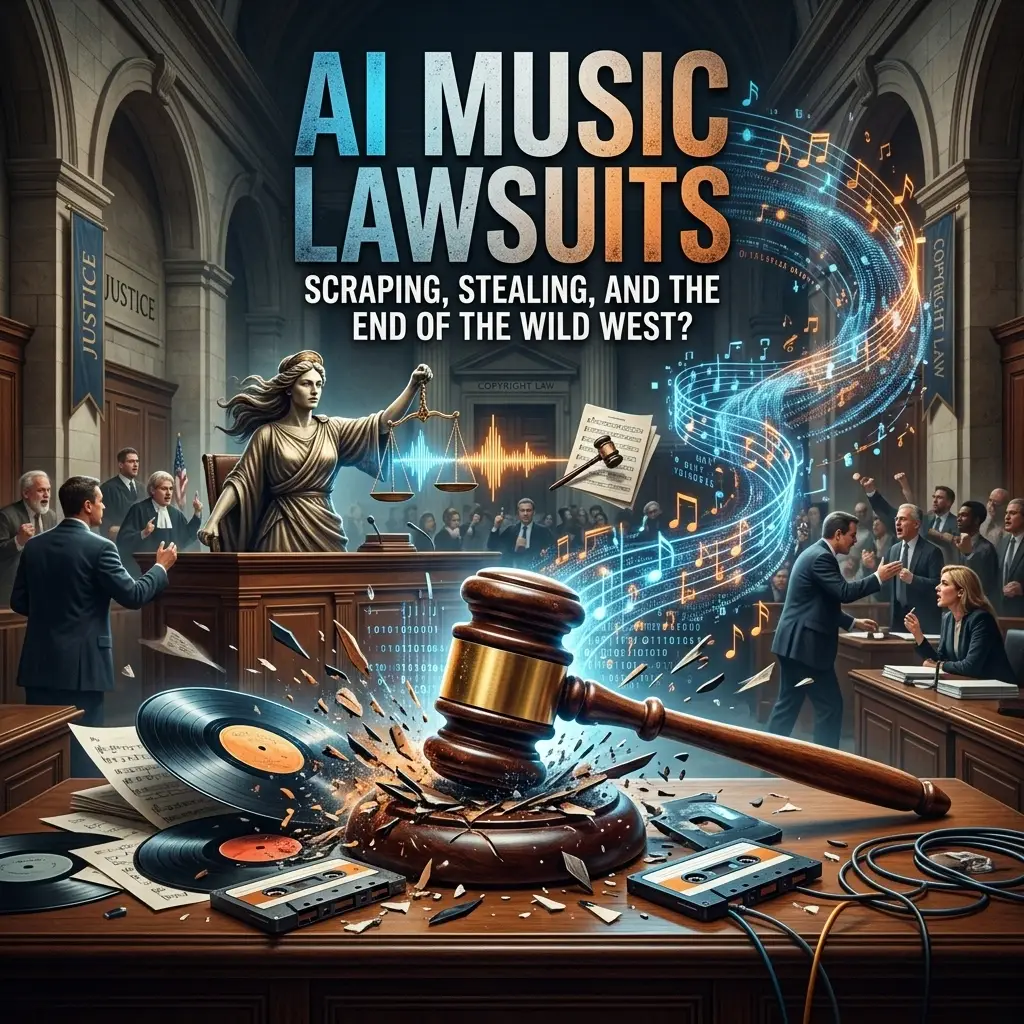
In mid-2024, the major players: Sony Music Entertainment, Universal Music Group, and Warner Records: decided they had seen enough. They filed massive lawsuits against Suno and Udio. The allegation is simple: these companies used copyrighted recordings to train their AI models without asking for permission or paying a cent.
The labels aren't just looking for a small settlement. They are looking to establish that the very foundation of these AI models is built on theft. When you prompt an AI to "make a 1970s soul track with a gravelly male voice," the AI isn't pulling that sound out of thin air. It’s pulling from a database of thousands of hours of actual soul music recorded by real people who were paid by real labels.

The Scraping Problem: The YouTube Goldmine
The lawsuits bring up a dirty secret of the AI industry: scraping. To build a model that understands music, you need a lot of it. The easiest place to get it is YouTube. It is the world’s largest library of human creative output, and it’s also a legal minefield.
Legal rulings have started to focus on this specific act. Scraping YouTube for audio data to train a commercial product is a direct violation of terms of service, but more importantly, it’s being framed as a massive copyright hit. The labels argue that Suno and Udio didn't just "listen" to the music to learn; they copied it into their systems. In the eyes of the law, that’s an unauthorized reproduction.
This isn't like a human being listening to a song and being inspired to write something similar. A human doesn't need to ingest a digital copy of every Queen song to understand how to sing a harmony. An AI does. That distinction is where the "Wild West" era starts to fall apart.
Stealing vs. Learning
The defense from AI companies is usually centered on "fair use." They argue that the AI is "learning" from the music, not "copying" it. They claim the output is transformative: meaning it creates something entirely new that doesn't replace the original work.
But the industry investigation by the International Confederation of Music Publishers (ICMP) tells a different story. Their two-year study found that the scale of unauthorized use is unprecedented. We aren't talking about a few songs. We’re talking about tens of millions of works being fed into these machines daily. The ICMP called it the "largest IP theft in human history."
When you look at the data, it's hard to argue with the "stealing" label. OpenAI admitted to training its Jukebox model on 1.2 million songs years ago. If a person walked into a record store and walked out with 1.2 million vinyl records without paying, we’d call it a heist. Doing it digitally shouldn't change the definition of the act.
The March 2026 Turning Point
As of last month, the landscape shifted again. In March 2026, the White House released a national policy framework for AI. In a move that shocked the music industry, the administration suggested that training AI on copyrighted material might not actually violate copyright law.
This framework suggests that as long as the AI isn't spitting out an exact copy of a song, the process of using that song to "teach" the model is acceptable. This is a massive win for tech companies and a devastating blow for artists and labels. It creates a weird paradox: the government says it’s fine to use the data, but the labels are still suing for billions in damages.
This policy has essentially legitimized the scraping culture that the labels are trying to kill. It suggests that the "Wild West" might not be ending because of regulation, but rather because the government decided to let the outlaws run the town.

The End of the Wild West?
Despite the White House policy, the "Wild West" vibe is definitely changing. We are seeing a shift from "ask for forgiveness later" to "make a deal now."
Major labels are starting to strike deals with AI platforms, but these are selective. They are "opt-in" ecosystems where labels get a cut of the revenue. This creates a two-tiered system. On one side, you have the protected, licensed AI tools. On the other, you have the open-source or "rogue" models that continue to scrape the web.
The real danger now is for the individual user. Many AI platforms have updated their terms of service to shift legal liability onto the person clicking the "generate" button. If you create a song that sounds too much like a Drake track and get sued, the AI company might not be the one on the hook: you will be.
A Visionary Outlook: The Creative Future
We are heading toward a world where the value of a song isn't just in the listening, but in the "training data" it provides. In an inspirational sense, this could lead to a new era of creator rights where every artist is paid for the "intelligence" their work provides to the collective AI.
Imagine a blockchain-verified system where every time an AI uses your unique vocal style or melodic structure to generate a new track, a micro-payment is triggered. This would turn the "theft" into a perpetual royalty stream.
But we aren't there yet. Right now, we are in the middle of a messy, expensive fight over who owns the building blocks of sound. The Suno and Udio cases will likely end up in the Supreme Court. The result will determine whether music remains a human-driven art form or becomes a commodity owned by whoever has the fastest web scraper.

Minimalist Reality
The reality is simple:
- Companies scraped the world's music without permission.
- Labels are suing to protect their billion-dollar catalogs.
- The government is leaning toward the tech companies.
- Artists are caught in the middle.
The "Wild West" is ending because the stakes got too high. When billions of dollars are on the line, the law eventually catches up. Whether it catches up in favor of the creators or the machines is the only question left.
The next few months will define the next fifty years of music. We are watching the code being written for how humans and machines will create together; or against each other. It’s a visionary moment, but it’s also a cautionary one. The music hasn't stopped, but the rules of the dance have changed forever.
monroerodriguez.com