Let’s be real: Spotify is a museum. It’s where art goes when it’s finished, framed, and polished until it loses its fingerprints. It’s a beautiful place to visit, but it’s not where the magic actually happens. If you’re an artist or a creator waiting for the "perfect" moment to drop your masterpiece on a major DSP (Digital Service Provider), you’re essentially waiting for a bus that’s already left the station.
The real movement isn't happening in the clean, sterile halls of curated playlists. It’s happening on the digital street corner. It’s happening in the comments of a 30-second demo. It’s happening on SoundCloud.
We’ve been conditioned to think that if it isn't on Spotify, it doesn't exist. But if you want to build a legacy that actually breathes, you have to look toward the Social DSP model. It’s about moving away from the passive "lean back" listening experience and toward something far more ancestral: community.
The Social DSP Model
SoundCloud isn't just a place to host files; it’s a social network disguised as a music player. On Spotify, the relationship is one-way. You upload, the algorithm sorts, the listener consumes. There is a wall between the creator and the fan that’s about ten miles thick.
On a Social DSP, that wall is non-existent. You aren't just a profile picture; you’re a participant. This shift from "Music Platform" to "Social Platform" is the secret sauce for the next generation of visionary creators. It’s about creating a soulful signal in a world drowned in noise. While everyone else is trying to hack an algorithm, the smartest movers are busy talking to their people.

Why Scrappy Beats Perfect Every Time
We have this obsession with perfection. We think we need the $500-an-hour studio, the professional master, and a six-month rollout plan. But perfection is often just a mask for fear.
The "Scrappy Strategy" is the antidote. It’s about posting the 30-second snippet you recorded on your phone at 2 AM. It’s about the rough remix that only took you an hour to flip. SoundCloud thrives on this energy. When you post a demo, you aren't just sharing a song; you’re sharing a process. You’re inviting people into the workshop rather than just showing them the finished furniture.
This creates a sense of "I was there when." When a fan hears a demo that eventually turns into a hit, they feel a sense of ownership. They didn't just find a song; they helped raise it. If you’re looking for ways to integrate this kind of raw energy into your brand, checking out some of our projects might give you a feel for how we blend the unfinished with the visionary.
Waveform Wisdom and Direct Engagement
One of the most humanizing features of the Social DSP is the ability to comment on specific parts of a waveform. It sounds small, but it’s revolutionary. A fan can tell you exactly when the bass hit their soul or when the lyrics made them tear up.
This isn't just data; it’s a feedback loop for your spirit. It’s A/B testing your soul. You can see which parts of your art are resonating in real-time. Instead of looking at a bar graph of "monthly listeners," you’re seeing human reactions to specific moments of your creativity.
And then there’s the power of the "24-hour private link." Sending an unreleased track to your top ten fans via DM creates a level of intimacy that a Spotify "For You" playlist can never replicate. It’s the digital equivalent of passing a mixtape in the back of a classroom. It’s exclusive, it’s direct, and it’s deeply personal.
The Money: Fan-Powered Royalties
Let’s talk about the bag, because the traditional streaming model is, frankly, broken for independent creators. In the "Big Pool" model, all the money from all the listeners goes into one giant bucket. That bucket is then divided based on total market share. This means your super-fan’s $10 monthly subscription is actually helping pay Drake and Taylor Swift, even if that fan only listened to you all month.
SoundCloud’s Fan-Powered Royalties changed the game. If a fan spends 100% of their time listening to your music, your share of their subscription fee actually goes to you.
This is where the visionary meets the practical. It honors the direct connection between the artist and the audience. It’s an economic version of "Innovative Tradition": using modern tech to return to a more honest, village-style exchange of value. You don't need a million casual listeners; you need a thousand true fans who are locked into your frequency.

The TikTok-to-SoundCloud Pipeline
We’ve all seen it. A 15-second snippet goes viral on TikTok. It’s catchy, it’s a vibe, and everyone wants more. But the artist hasn't finished the song yet. Or maybe they have, but the "official" release is two months away because of distribution timelines.
This is where the pipeline comes in. While the big labels are busy clearing samples and setting up "New Music Friday" ads, the scrappy artist drops the full version: or even just an extended loop: on SoundCloud immediately.
People don't go to Spotify to find the "new-new." They go there to find what’s already been "discovered." They go to SoundCloud to find the source. By the time a song hits the mainstream charts, the SoundCloud community has already lived with it for months. They are the tastemakers, the curators, and the true cultural drivers.
A/B Testing Your Soul
The feedback loop on a social platform does more than just boost your ego; it improves your craft. When you’re in a vacuum, it’s easy to get lost in your own head. You wonder if a bridge is too long or if a melody is too simple.
When you drop those thoughts onto a social DSP, the community answers. You might find that the "throwaway" track you posted on a whim is the one everyone is obsessed with, while the one you spent weeks on gets a lukewarm reception. This isn't a sign to change who you are; it’s a tool to help you see where your "soulful signal" is strongest.
It’s about honoring the ancestral wisdom of the "call and response." In many traditional cultures, the artist isn't a lonely figure on a pedestal; they are a facilitator of a shared experience. The Social DSP brings that dynamic into the digital age.
Innovative Tradition in the Digital Space
At Black Conjure AI, we talk a lot about Innovative Tradition. It sounds like a contradiction, but it’s actually a roadmap. It’s about using the most advanced tools available: AI, social streaming, decentralized finance: to get back to something very old: direct human connection.
The "museum" model of music streaming is a relatively new invention, and it’s one that often strips the soul out of the process. By embracing the messy, social, and direct nature of platforms like SoundCloud, you aren't just being "indie": you’re being visionary. You’re choosing a path that prioritizes the spirit over the system.
You aren't just making "content"; you’re building a sanctuary for your fans. And that sanctuary doesn't need a gatekeeper to tell you when it’s ready for the public. It’s ready whenever you decide to hit "upload."

Stop Waiting for the Green Light
The biggest mistake you can make right now is waiting for permission. Waiting for a label, waiting for a playlist placement, or waiting for the "perfect" mix.
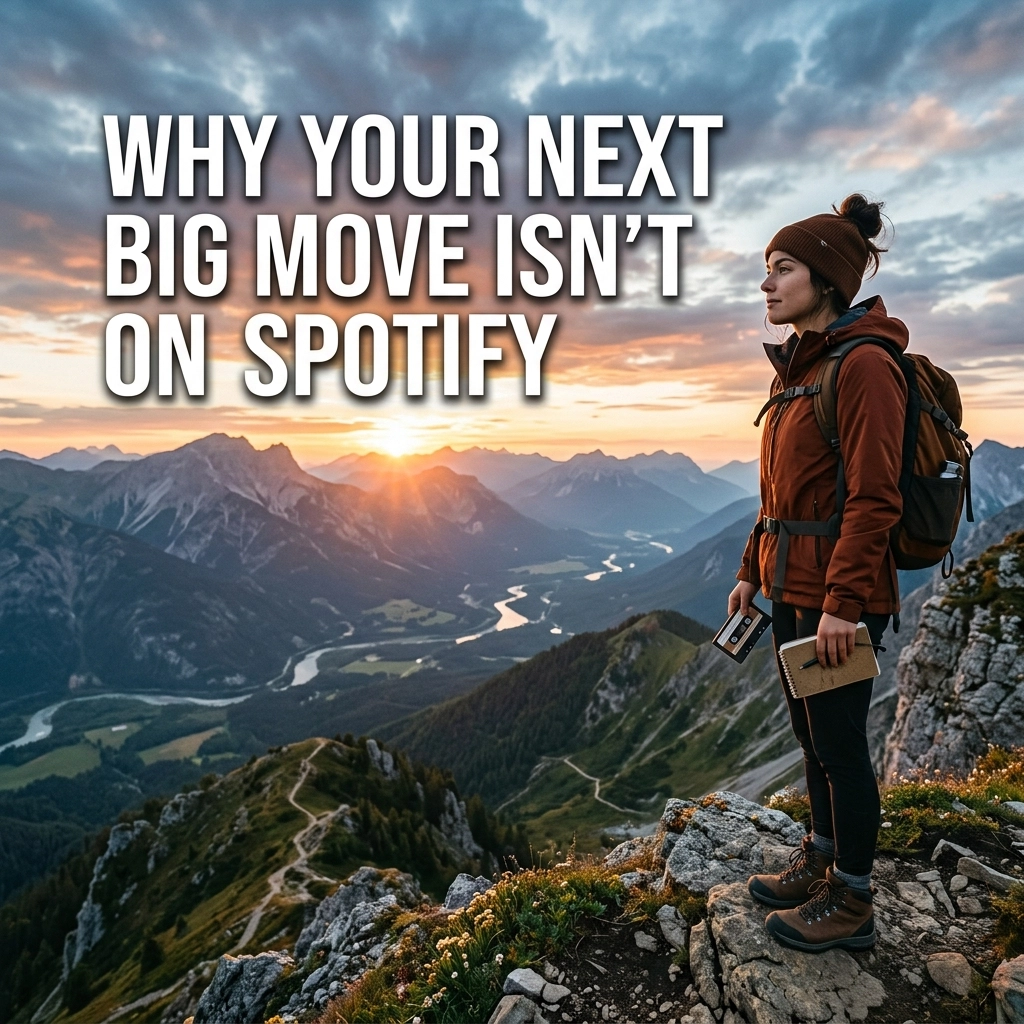
Your next big move isn't a single release on Spotify. It’s a shift in how you view your relationship with your audience. It’s moving from being a "user" of a platform to being a "leader" of a community.
Ditch the perfectionism. Post the demo. Talk to the person who commented on the 1:14 mark of your waveform. Send that private link. The future of music isn't in a boardroom; it’s in the connection you’re building right now, one scrap at a time.
If you’re ready to stop playing by the old rules and start building something that actually resonates, it’s time to rethink where you’re putting your energy. The tools are in your hands, and the community is waiting.
Are you ready to make a move? Let’s talk about how to bring your vision to life. Contact us to start the conversation.