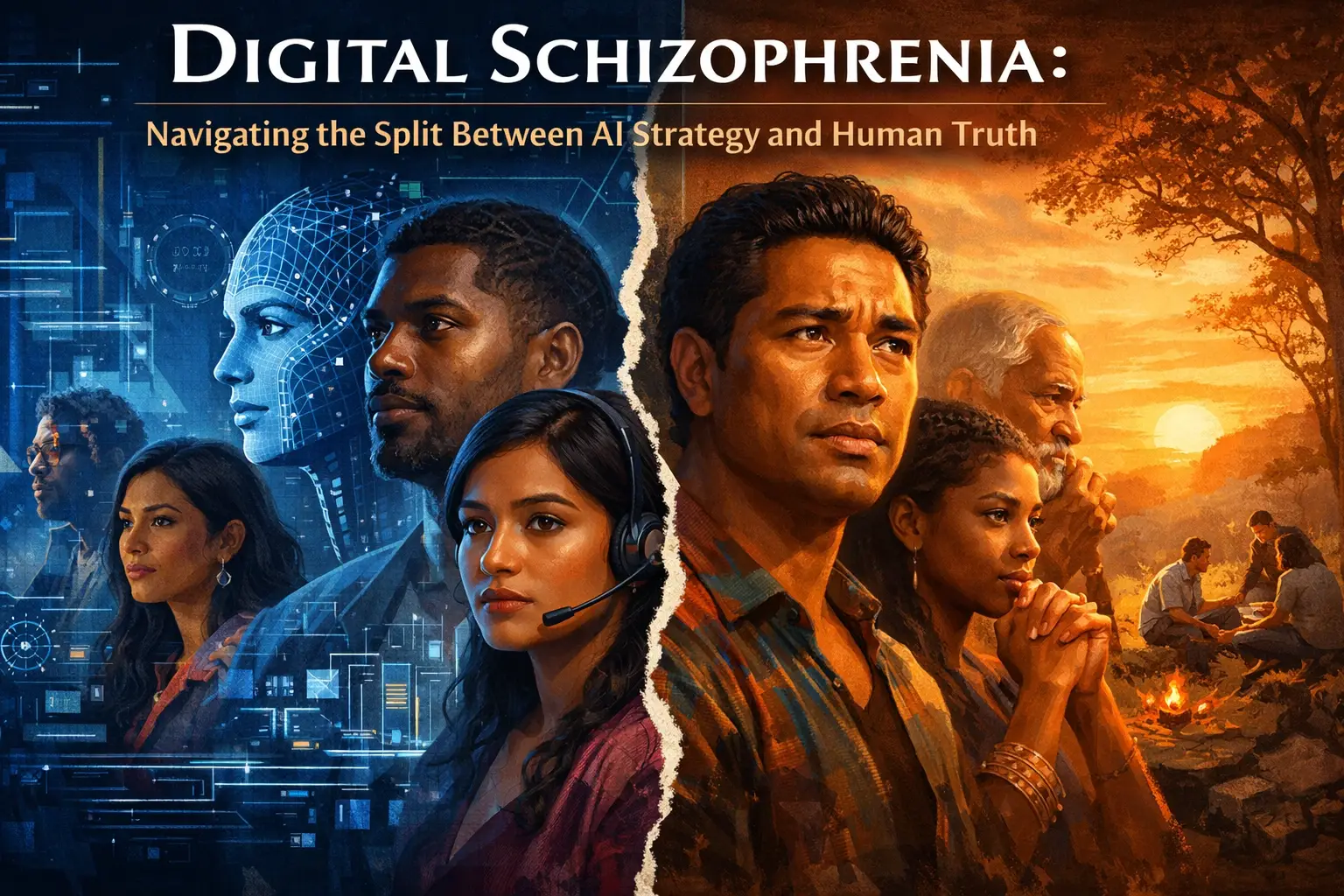
It’s March 2026, and the digital landscape looks nothing like it did two years ago. We’ve moved past the initial "wow" factor of AI and entered a much more complex, and frankly, more dangerous era for creators: especially those of us working with ancestral motifs, sacred symbols, and cultural heritage.
If you’re a designer, a brand owner, or a visionary creator, you’ve probably heard the hype: "AI is the ultimate tool for democratization!" But here’s what the "experts" and the big tech platforms aren't telling you: the current legal system is failing our history. In the rush to automate everything, ancestral art is being treated like a free buffet for algorithms, and the laws meant to protect creators are leaving a massive gap where our heritage used to be.
At Black Conjure AI, we believe in using technology to amplify culture, not erase it. But to do that safely, you need to understand the hidden mechanics of AI copyright and how to protect the soul of your work.
The Copyright Trap: Why Your Prompts Aren't Enough
Let’s start with the hard truth that keeps a lot of IP lawyers up at night. As of 2026, the U.S. Copyright Office and various international bodies have remained firm: AI-generated works generally cannot be copyrighted.
Why? Because copyright law is built on the foundation of "human authorship." To the law, an AI is a tool, like a hammer or a very smart paintbrush. If the "hammer" decides where the nails go, the person holding it can’t claim they built the house alone. When you type a prompt into a generative model and it spits out a masterpiece, the law sees that output as a product of the machine's "creative" choices, not yours.
This creates a massive vulnerability for anyone working with ancestral art. If you use AI to generate a pattern based on traditional Yoruba textiles or Haitian Vudu symbols, and that output is 100% AI-generated, you likely don’t own it. It effectively falls into the public domain the moment it’s created. That means anyone can take that image, slap it on a t-shirt, and sell it, and you’ll have a very hard time stopping them.

The Theft of the "Digital Ancestor"
The real "secret" that experts don't want to talk about is how AI models are trained. These systems were built by scraping billions of images from the internet without the consent of the original creators or the communities that hold the cultural rights to those styles.
When an AI reproduces "Indigenous-style" art or "Black aesthetic" imagery, it isn't "inspired" the way a human artist is. It is mathematically reconstructing patterns. This leads to several major issues that we’re seeing more frequently:
- Lack of Attribution: AI systems provide zero credit to the Traditional Owners or the lineage of artists who perfected these styles over centuries.
- Cultural Protocol Violations: AI doesn’t understand that certain symbols are sacred, gender-specific, or reserved for specific community members. It treats a sacred sigil the same way it treats a picture of a coffee mug.
- Inauthentic Reproductions: We’re seeing a flood of "generic" ancestral art that looks right on the surface but lacks the deep meaning and intent that makes cultural art powerful.
Take the case of artists like Tufan Chakma, who have seen AI-generated versions of their specific cultural work converted into commercial products without a dime going back to the community. This isn't just a legal issue; it's a spiritual and cultural one.
What They Aren’t Telling You About "Public Domain"
Large tech companies love to tell you that "the data was already public." But "publicly accessible" is not the same as "public domain." Just because a photo of a hand-woven kente cloth is on a museum website doesn’t mean an AI company should be allowed to use it to train a model that eventually replaces the weaver.
The secret the experts hide is that by using these "generic" AI models without a strategy, you are essentially participating in the dilution of your own culture. You’re trading long-term ownership for short-term convenience.

How to Protect Your Ancestral Art in an AI World
So, is all hope lost? Absolutely not. At Black Conjure AI, we’re all about being visionary. We don’t run from the tech; we master it. Here is how you can actually protect your work and maintain your competitive edge in 2026.
1. The "Human-in-the-Loop" Workflow
To secure copyright, you must prove "substantial human involvement." This means your workflow shouldn't just be Prompt -> Download. You need to show that you directed the creative process.
- Layering: Combine AI elements with hand-drawn sketches or digital painting.
- Composition: Manually arrange elements rather than letting the AI decide the layout.
- Post-Processing: Use AI as a base, then use your human eye to refine, edit, and transform the work into something uniquely yours.
2. Document Your Process
If you ever need to defend your work, you’ll need a "paper trail." Save your early sketches, your reference photos (that you own!), and screenshots of your iterative process. This proves to the copyright office that the AI was just one of many tools you used to bring your vision to life.
3. Move Away from Generic Models
The most visionary creators are moving toward "Small Language Models" or custom-trained LoRAs (Low-Rank Adaptation). Instead of using a general AI that knows a little bit about everything (and a lot about nothing), we use tools that can be trained on specific, ethically sourced datasets.
At Black Conjure AI, we emphasize the importance of our services because we understand that the "generic" look is the enemy of authentic representation.

Cultural Integrity as Your New Competitive Edge
In a world where everyone can generate a "cool" image in five seconds, what becomes valuable? Authenticity. Provenance. Soul.
People can feel when art has been stripped of its context. As AI becomes more common, consumers are going to crave the "real deal" even more. By prioritizing cultural integrity, you aren't just doing the "right thing": you’re making a smart business move.
When you look at our projects, you see a commitment to this balance. We aren't just making pretty pictures; we’re honoring the weight and history of the symbols we use. That depth is what makes a brand stand out in a sea of AI-generated noise.
The Future: Collaboration, Not Extraction
The most effective way to protect ancestral art isn't just through lawsuits: it's through the development of "Sovereign AI." This means involving the actual descendants and First Nations people in the development of the systems.
We’re seeing amazing examples of this globally, where Traditional Owners are collaborating with researchers to program AI with specific geographic and cultural knowledge that stays within the community. This is the visionary path forward. We don't just want AI that "looks" like us; we want AI that works for us and respects our boundaries.

Why Context is the New Gold
The experts won't tell you this because they want you to keep clicking "generate" on their platforms. But the truth is, the prompt is the least important part of the process. The context is what matters.
Who made this? Why was it made? What lineage does it represent?
If you can’t answer those questions, your art is just data. But if you can infuse your AI workflow with human intention and cultural respect, you’re creating something that the law: and the world: will eventually have to recognize as truly yours.
If you’re ready to stop making "generic" art and start building a legacy that actually belongs to you, check out what we’re doing at Black Conjure AI. We’re here to help you navigate this new frontier without losing your soul in the process.
Let’s build something that lasts. Something that the ancestors would recognize.
Want to learn more about how we blend tech with tradition? Contact us to start a conversation about your next visionary project.