Creation is a spiritual act, but the world we’ve built runs on paper and code. Whether you’re a Creative Collector curating the next wave of aesthetic movements or a Fashion Innovator stitching the future of digital-physical garments, you are navigating a landscape that is changing faster than a seasonal trend. In 2026, the tools have evolved, but the legal traps have only grown more sophisticated: and more likely to ghost your career if you aren't careful.
We’re seeing a new era of "Legal Armor." It isn't just about staying out of court; it’s about defending the culture we are building. It’s about ensuring that your vision remains yours. Let’s dismantle the myths that are currently putting your legacy at risk.
The Myth of the Postmark
One of the most persistent fairytales in the creative community is the "Poor Man’s Copyright." You’ve heard it before: put your sketches, your beats, or your patterns in an envelope, mail it to yourself, and let the postmark prove you did it first.
In the age of generative AI and rapid-fire digital theft, this is nothing more than a placebo. It holds zero weight in a federal courtroom. If you want real protection, the US Copyright Office is the only path that actually grants you the right to sue for statutory damages and attorney’s fees. Mailing yourself a letter is a vibe; registering with the government is a fortress.

Spiritual Integrity and the Master Recording
There is a deep connection between legal integrity and what we call Spiritual Integrity. When you sample a piece of music or reference a textile pattern from an elder, you aren't just moving pixels or sound waves: you are interacting with the soul of a composition.
The industry often talks about "clearing" a sample, but we should talk about respecting the master recording. When you bypass the legal process, you are essentially severing the umbilical cord between the creator and the creation. This isn’t just about money; it’s about the lineage of the work. If you’re building on indieailawsuit.com contexts, you know that defending the culture means honoring the originators. You cannot claim to be visionary if you are harvesting without permission.
The Aretha Franklin Napkin vs. The AI Age
We all love the legend of Aretha Franklin’s handwritten wills found in her couch cushions and on napkins. It’s a testament to a life lived in the moment. But in 2026, the "napkin contract" is a death trap.
In an era where AI can hallucinate a person’s likeness or mimic a designer’s signature style, the casual "handshake deal" or the Instagram DM agreement won't save you. You need formal protection that accounts for training data, derivative rights, and digital ownership. Your Creative Collector status depends on your ability to prove what is yours in a world of infinite copies.
The 30-Second Sampling Lie
Let’s kill the biggest lie in music and fashion right now: "If it’s under 30 seconds, it’s fair use."
No. It’s not.
There is no magical timestamp that makes theft legal. Whether it’s a two-second snare hit or a three-minute melody, if it’s recognizable and you don't own it, you’re in the red. The same applies to fashion innovators using "just a piece" of a copyrighted print. If you haven't cleared it, you’re just waiting for a cease and desist to haunt your inbox.

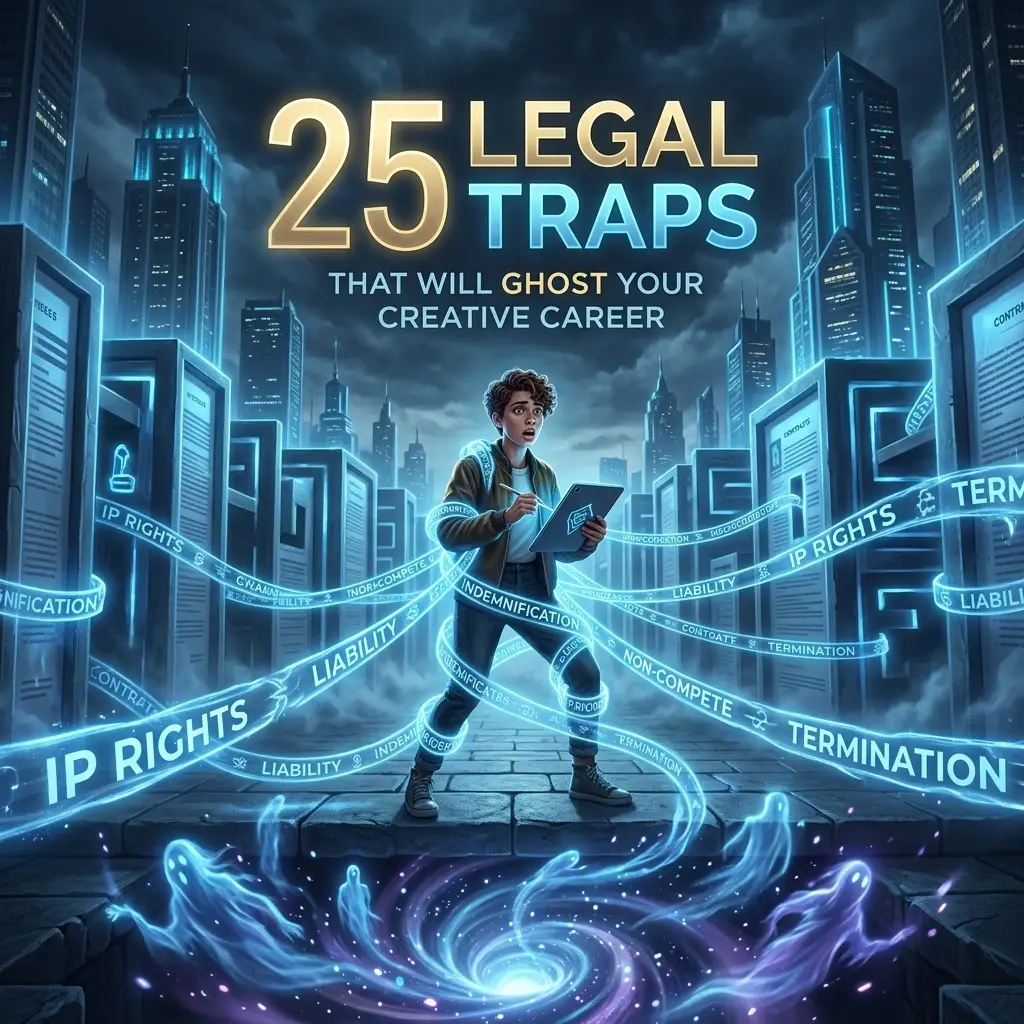
25 Traps to Avoid Right Now
To keep your career from becoming a cautionary tale, here is your checklist of legal armor.
- Trusting the "Poor Man’s Copyright": As mentioned, it’s useless. Register with the US Copyright Office.
- The 30-Second Rule: Sampling without a license is a gamble you will eventually lose.
- Napkin Agreements: If it’s not a formal contract, it’s a suggestion. Formalize every collaboration.
- Ignoring AI Training Rights: Not specifying how your work can be used in training datasets is giving away your future.
- Skipping the Master Use License: You cleared the song, but did you clear the recording? You need both.
- "Work for Hire" Confusion: If you don't sign a contract stating otherwise, the freelancer might actually own your brand’s assets.
- Fair Use as a Strategy: Fair Use is a defense you use in court after you’ve already been sued. It is not a permission slip.
- Instagram DM "Contracts": Screenshots are messy. Use digital signing platforms for everything.
- No Exit Clause: What happens when the collab sours? If you don't have a "divorce" clause, your project is held hostage.
- Metadata Neglect: If your digital files don't have your copyright info embedded in the metadata, you’re making it easy for scrapers.
- Using "Copyright Free" Sites: Many of these sites have terms that change. You might be safe today and a pirate tomorrow.
- Trademarking Too Late: You built the brand, but someone else bought the URL and the trademark while you were "focusing on the art."
- Forgetting Synchronization Rights: You have the song, but you don't have the right to put it in your fashion film without a Sync license.
- Ignoring Moral Rights: In many jurisdictions, the "right of integrity" allows an artist to block you from altering their work, even if you "bought" it.
- Public Domain Myths: Just because it’s old doesn't mean it’s free. Different countries have different expiration dates.
- Likeness Theft: Using an AI-generated model that looks suspiciously like a famous celebrity? That’s a Right of Publicity lawsuit waiting to happen.
- Font Licensing: Did you buy the license for that "cool" font for your logo, or did you just download the free trial?
- Stock Image Overuse: Many stock licenses have a "print limit." If your shirt goes viral and you sell 100,000 copies, you might be violating your license.
- Verbal Handshakes: In the eyes of the law, a handshake is just a way to spread germs. Get it in writing.
- No Liability Insurance: If your fashion product causes a skin rash or your AI software glitches and causes a loss, who pays?
- Co-Ownership Without a Plan: "We’ll split everything 50/50" is a nightmare when one person does 90% of the work.
- Ignoring Derivative Rights: Just because you changed it "by 20%" doesn't mean it’s a new work.
- Data Privacy Lapses: If you’re collecting emails on your shop without a privacy policy, you’re breaking international law.
- No Clear Title: Before you sell your collection, can you prove you own every single element?
- Waiting for Success to Get Legal: The best time to build your armor was yesterday. The second best time is today.

Defending the Culture
We are at a crossroads. The technology we use to create can also be used to erase us. By taking your legal standing seriously, you aren't just being "corporate": you are being a steward of your own energy. You are ensuring that when people look back at this era of innovation, your name is permanently attached to your contribution.
Don't let your creative career be ghosted because you were too busy creating to protect. Armor up. Your legacy is worth the paperwork.

Ready to build your legacy with intention?
If you're ready to move from creator to innovator, it's time to get your digital house in order. Start by securing your space in the community and staying informed on the latest shifts in design and tech.
Register for your portal access here to stay connected with the future of design.