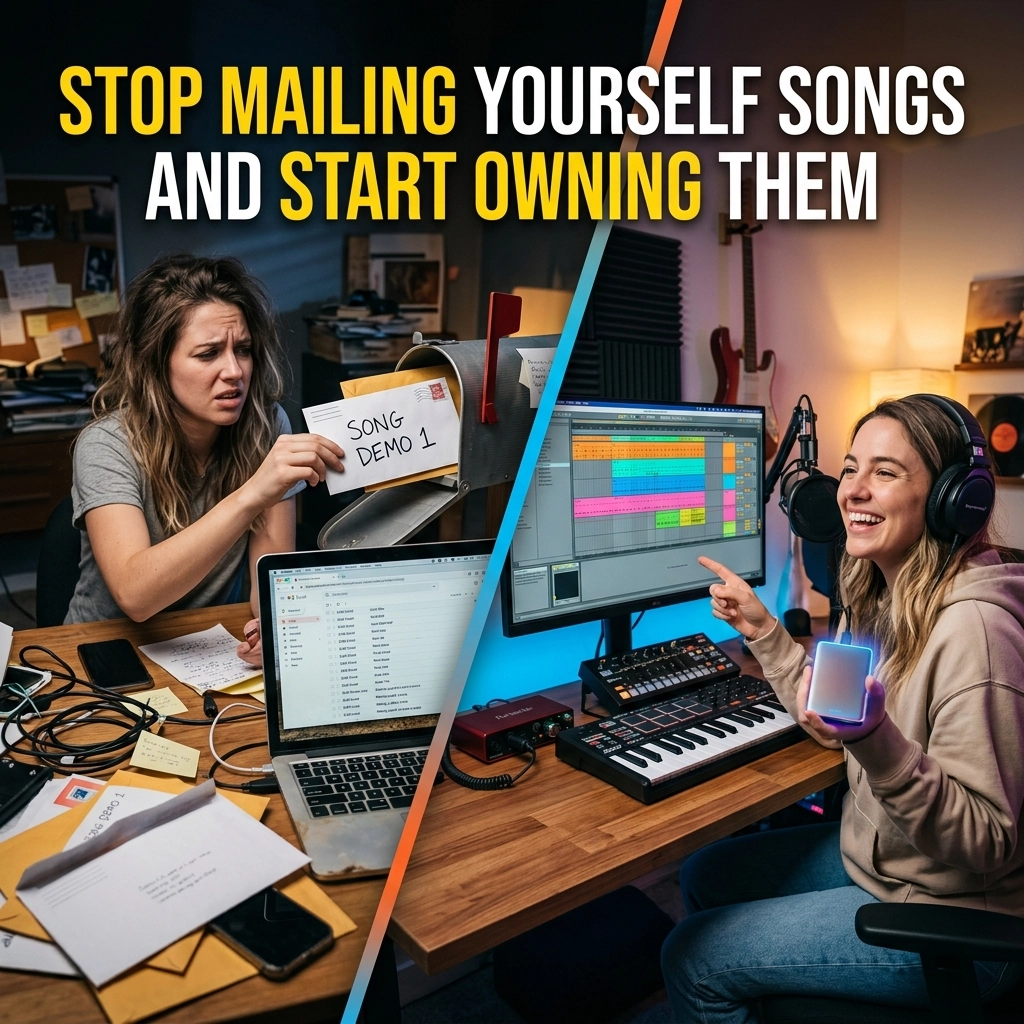
There is a persistent myth that has circulated in green rooms and basement studios for decades. It’s the story of the "Poor Man’s Copyright." You know the one: you finish a track, burn it to a CD (or put a thumb drive in an envelope), and mail it to yourself via certified mail. The logic suggests that the postmark acts as a federally recognized timestamp, proving you created the work on a specific date.
It sounds romantic. It sounds like a scrappy underdog move. It is also, legally speaking, a total fantasy.
The postmaster is not a copyright registrar. A sealed envelope sitting in your desk drawer is just a dusty piece of mail, not a legal shield. If you’re still relying on the postal service to protect your intellectual property, you aren't just taking a risk: you’re leaving your legacy unprotected. True ownership requires more than a stamp; it requires an understanding of how the law actually views your art.
The Myth of the Postmark
Let’s be clear: in the United States, you technically own a copyright the moment you "fix" an original work in a tangible medium. The second you record that vocal or write those lyrics in your notes app, you own it. However, owning it and being able to defend it in a court of law are two very different things.
The U.S. Copyright Office is the only gatekeeper that matters when the stakes get high. If you want to sue someone for infringement: if a major brand swipes your melody for a commercial or a superstar "borrows" your hook: you cannot even walk into a federal court without a registration certificate. The "Poor Man’s Copyright" won't get you past the front door. Furthermore, registering your work promptly opens the door to statutory damages and attorney’s fees. Without that official registration, you might only be able to claim "actual damages," which are notoriously difficult to prove and often not worth the cost of the lawyer.
Protecting your work is an act of spiritual integrity. It’s about honoring the energy you poured into the creation. Leaving it to chance is a disservice to the ancestors who paved the way for your voice to be heard.

The Two-Headed Beast: Comp vs. Master
To own your music, you have to understand exactly what "music" is in the eyes of the law. Every song is actually two separate pieces of property. Think of it like a soul and a body.
- The Composition (The Soul): This is the song itself: the melody, the lyrics, and the underlying structure. This is usually managed by publishers and Performance Rights Organizations (PROs) like ASCAP or BMI.
- The Master (The Body): This is the specific sound recording of that song. When you hear a track on Spotify, you are hearing the Master.
The confusion between these two is where many independent creators lose their footing. You might own the "soul" because you wrote the lyrics on a napkin, but if you recorded it over a "free" beat you found on YouTube, you likely don't own the "body."
This dual nature is why split sheets are non-negotiable. A split sheet is a simple document that states who owns what percentage of the composition and the master. It sounds formal, but it’s actually a tool for peace. It ensures that everyone who contributed to the magic is recognized and compensated. When the money starts flowing, the "we’ll figure it out later" vibe quickly turns into a legal nightmare.
Napkins, Handshakes, and the YouTube Trap
There is a strange paradox in the music industry: a handwritten note on a greasy napkin can be a legally binding contract, yet a 20-page "free" license from a beat store can be a legal minefield.
If you and a collaborator sit down, write out your ownership percentages on a napkin, sign it, and date it, that document holds weight. It shows intent. It shows an agreement. On the flip side, many "free for non-profit" beats come with strings attached that would make a marionette jealous. These licenses often stipulate that once you hit a certain number of streams, the license expires, or you owe the producer a massive buyout, or: worse: you can never actually own the master recording.
When you use these "free" assets without reading the fine print, you are building your house on rented land. You are essentially a tenant in your own song. Owning your music means having a clear chain of title from the moment of inspiration to the final export.

Metadata is the New Digital Lineage
In the modern era, ownership isn't just about paper; it’s about data.
Consider Spotify’s acquisition of WhoSampled (Song DNA). This wasn't just a tech play; it was a move to map the digital lineage of every sound on their platform. Metadata: the information embedded in your audio files like ISRC codes, composer names, and publisher info: is the "DNA" of your music.
If your metadata is messy or missing, you are effectively a ghost in the machine. You might have written the greatest song of the decade, but if the digital systems can’t find you, the royalties will sit in a "black box" until they eventually expire or get distributed to the biggest players in the game.
Metadata is how we honor our heritage in the digital age. It’s the modern version of an oral tradition, ensuring that your name stays attached to your work as it travels across the globe. When you take the time to correctly tag your files and register your works with the MLC and SoundExchange, you are claiming your place in the lineage.
Why Your Legacy Deserves Better
Why do we care so much about these technicalities? Because your music is more than just "content." It is a reflection of your journey, your culture, and your spirit.
Historically, creators: especially those from marginalized communities: have been stripped of their ownership through predatory contracts and "handshake deals" that only benefited the person with the most power in the room. Deciding to own your work is a radical act of self-respect. It’s a way to ensure that your creative fruit nourishes your own family and community rather than just lining the pockets of a corporate entity.
Taking the leap from "mailing yourself an envelope" to "registering with the U.S. Copyright Office" is a rite of passage. It signifies that you are moving from a hobbyist mindset to a professional one. It tells the world that you value your vision enough to protect it.

The Path to Sovereign Creation
The transition to true ownership doesn't have to be overwhelming. It starts with a few intentional steps:
- Stop the Mail: Forget the post office. Use the official government portal to register your works.
- Sign the Sheets: Every time you collaborate, fill out a split sheet before you leave the room. It keeps the energy clean and the business clear.
- Read the Fine Print: If you are using samples or leased beats, know exactly what you are "buying." If you don't own the master, you don't own the asset.
- Master Your Data: Treat your metadata with the same level of care you treat your mix. It is the bridge between your art and your income.
You can learn more about how we view the intersection of creativity and legacy on our about page. We believe that the tools of the future should be used to protect the stories of the past and the visions of the present.
Protecting your legacy is part of honoring the craft. When you own your music, you own your voice. You aren't just making songs; you are building an estate. You are creating a digital monument that can stand for generations. So, put down the envelope, pick up the registration form, and start acting like the owner you already are.
Your future self will thank you for the paperwork you did today.
Ready to elevate your brand's visual identity and protect your creative vision? Explore our design services and let’s build something that lasts.