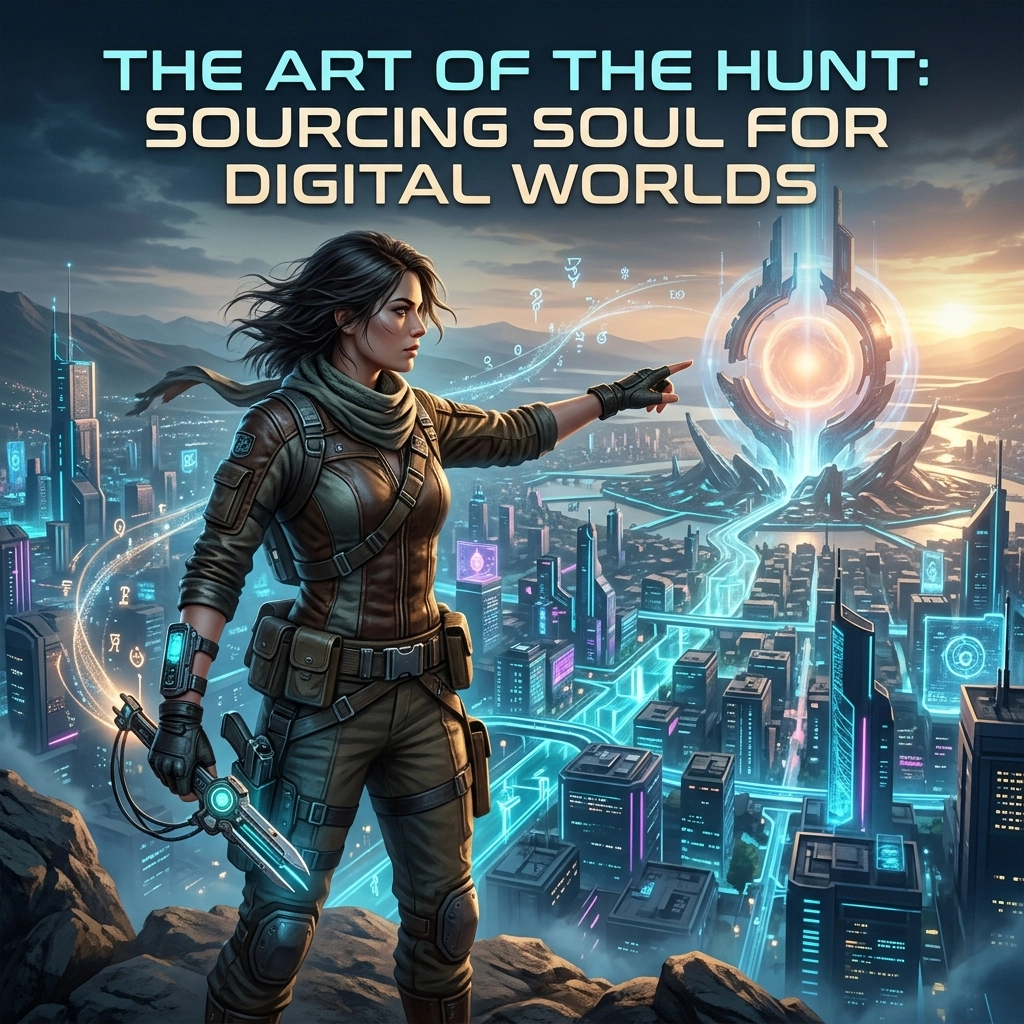
When you’re deep into a game, staring down a boss or navigating a neon-lit rain-slicked alleyway, the music isn't just background noise. It’s the invisible architecture of your emotions. But have you ever stopped to wonder how that specific, spine-tingling track ended up there? It’s rarely as simple as a developer liking a song and dragging it into the engine.
The world of music supervision for video games is a high-stakes scavenger hunt. It’s a mix of legal gymnastics, historical archiving, and high-tech wizardry. According to industry veteran Sergio Pimentel, finding the "soul" for a digital world requires more than just a good ear: it requires the instincts of a private investigator and the diplomacy of a peace negotiator.
Digital Detectives and the Lost Masters
Most people think music supervision is just making playlists. In reality, it’s closer to "sleuth work." When a game needs a specific vibe: maybe a rare 1970s Afrobeat track or an obscure 90s underground house anthem: the supervisor becomes a digital detective.
The challenge isn't just finding the music; it's finding who owns it. This is where the LinkedIn stalking begins. Imagine trying to track down the estate of a percussionist who recorded a single session in 1974 and then disappeared from the public record. You’re digging through old liner notes, calling distant relatives, and scouring social media to find anyone who can sign off on the rights.
This level of dedication is what separates a generic soundtrack from a visionary one. At Black Conjure AI, we believe in the power of cultural imagination. Sourcing these sounds isn't just about filling a slot; it's about honoring the heritage of the music. When a supervisor finds a "lost master": a recording that hasn't been heard in decades: and places it in a modern game, they aren't just syncing audio. They are bridging generations. They are bringing a piece of human history into a virtual future.

Adaptive Audio: Remixing on the Fly
Once the music is found and the rights are cleared, the real technical magic begins. In a movie, the music is linear. It starts at point A and ends at point B. In a game, the player is the conductor. If you decide to stand in a corner and stare at a wall for ten minutes, the music has to account for that. If you suddenly sprint into a firefight, the energy has to shift instantly.
This is where "stems" come into play. Modern game engines like Unreal and Unity, paired with middleware like Wwise or FMOD, allow supervisors and sound designers to break a track down into its component parts: the drums, the bass, the melodies, and the atmosphere.
This is "remixing on the fly." When you’re in stealth mode, the game might only play the bassline and a light atmospheric pad. The moment the guards spot you, the engine "swells," bringing in the aggressive percussion and lead synths. It’s a seamless transition that reacts to the player's soul and actions. It turns the soundtrack into a living, breathing entity that evolves alongside the narrative. This innovative tradition of storytelling through sound is what makes the medium so immersive.
The Dinner Table Philosophy
Sergio Pimentel often refers to the role of a music supervisor as a seat at a very crowded dinner table. On one side, you have the artist or the record label, who wants their work respected and, of course, a fair paycheck. On another side, you have the game publisher, who has a strictly defined budget and a deadline that was probably yesterday. Then you have the game director, who has a specific artistic vision that might not always align with the legal realities of music licensing.
The supervisor’s job is to make sure everyone leaves the table satisfied. It’s a balancing act of managing egos, budgets, and creative expectations. You have to advocate for the artist's integrity while ensuring the music fits the digital world perfectly.
It’s about more than just a transaction. It’s about building a bridge between the physical music industry and the digital frontier. When this balance is struck correctly, it creates a "sync" that feels inevitable: as if the game and the music were born from the same spark of inspiration.

AI as the Bridge Between Heritage and Tech
In 2026, we can't talk about digital worlds without talking about AI. But instead of the usual fear-mongering about robots replacing musicians, the conversation in music supervision has shifted toward "rescue."
AI is currently being used as a sophisticated restoration tool. Think about those lost masters we mentioned earlier. Sometimes, the only surviving copy of a legendary track is on a degraded cassette tape or a scratched vinyl record. In the past, these would be unusable for a high-fidelity game. Today, AI-driven source separation allows supervisors to "un-bake" the cake.
We can now pull a pristine vocal performance out of a noisy, 50-year-old recording or isolate a drum break that was previously buried in a muddy mix. This tech isn't replacing the soul; it’s rescuing it. It’s allowing us to take heritage sounds and polish them for the modern era, ensuring that cultural traditions aren't left behind as we move into increasingly digital spaces. This is the core of what we do at Black Conjure AI: using technology to amplify human creativity, not overwrite it.
Challenging the Stereotype of "Game Music"
For too long, "video game music" was pigeonholed into bleeps, bloops, or generic orchestral swells. The hunt for soul in digital worlds is actively dismantling these stereotypes. By sourcing global sounds and obscure gems, music supervisors are introducing players to genres and cultures they might never have encountered otherwise.
When a kid in a suburb plays a game and hears a track from the Lagos underground or a neo-folk piece from the mountains of Bulgaria, their world expands. This is the visionary potential of the medium. We aren't just making games; we are creating cultural intersections.
The hunt is never over. As long as there are stories to tell in digital spaces, there will be a need for the sleuths, the engineers, and the visionaries who can find the signal in the noise of sync. It’s about finding the human heartbeat inside the machine.

The Future of the Hunt
As we look toward the future of interactive entertainment, the role of the music supervisor will only become more vital. We are moving into a world of hyper-personalization, where the music might not just react to your actions, but to your mood, your playstyle, and your history within the game.
But no matter how advanced the AI becomes or how powerful the game engines get, the "hunt" will always require a human touch. It requires someone who understands the weight of a lyric, the history of a rhythm, and the emotional resonance of a perfectly timed melody.
Sourcing soul isn't a technical problem to be solved; it's an art form to be mastered. It’s about looking at a digital landscape and knowing exactly which piece of human history will bring it to life.
If you're interested in how we're pushing the boundaries of design and digital storytelling, check out our projects or learn more about our vision.
Ready to bring some soul to your next project?
Whether you're building a digital world or a physical brand, let’s find the signal together. Contact Black Conjure AI today and let’s start the hunt.